TRADES
What to learn first
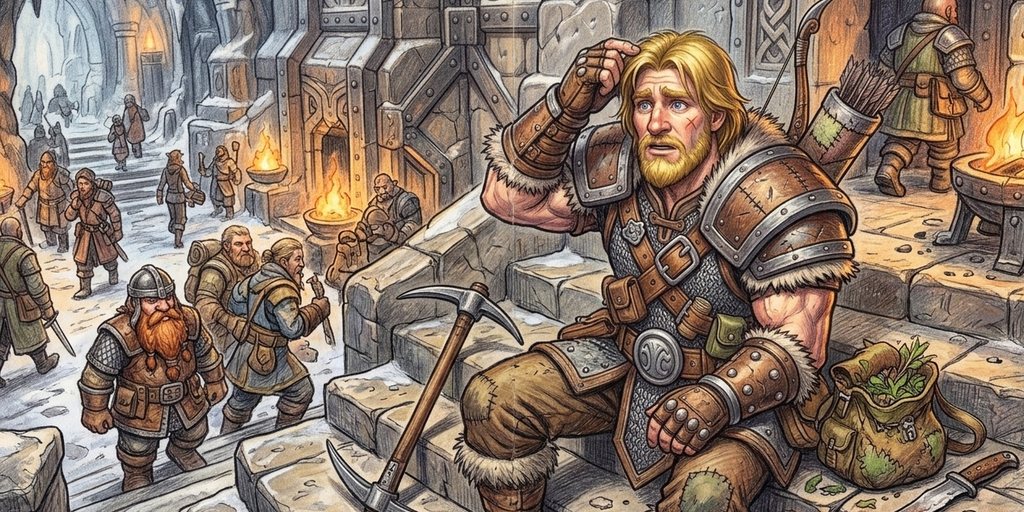
On my first evening in Ironforge I learned Herbalism, Mining and Skinning, one trainer after another, and the third one wouldn't teach me. Two is the limit. I went back and unlearned Mining, because the pick was heavy and I hadn't used it yet. Then I sat on the steps outside the bank and tried to work out what I had wanted the two of them for.
Why it pays
At the cap of 30 a profession gives you gold, armour or Legacy points, and rarely more than one of those. Gathering gives gold. Whatever you pick, dig or skin sells. The armour crafts give you gear. The travellers say the armour from Forever's new recipes binds on pickup, so it is for the crafter and nobody else. Legacy is the account's reward, and they say it counts every crafting profession at skill 150, 225 and 300 and the gathering professions not at all.
The trainers set the pace. A craft's Journeyman rank needs level 10 and takes you to 150. Expert needs level 20, costs 45 or 50 silver and takes you to 225. Artisan needs level 35. So at 30 every craft stops at 225, two of its Legacy challenges are within reach, and an alt of level 20 with two crafts at 225 has four of them.
 Artisan needs level 35, so 225 is the top at 30
What you need
About ten copper to start a craft, about 5 silver for Journeyman at level 10, and the Expert fee at 20. Expert has far fewer trainers than the other ranks, often one or two for each faction, so find yours before you need it. The pages on herbs and on leather name the ones for Enchanting and Leatherworking.
How
- For gold and nothing else, take two gathering professions at level 1 and keep them while you level. The next page explains why the early levels count.
- For your own armour, take the craft for your armour and the gatherer that feeds it. Warriors and Paladins take Mining with Blacksmithing. Hunters, Rogues, Shamans and Druids take Skinning with Leatherworking. Mages, Priests and Warlocks take Tailoring with Enchanting and need no gatherer, because cloth drops from humanoids.
- For Legacy, take two crafts and bring both to 225 soon after level 20. Or let your main gather and mail everything to an alt who crafts.
- If you can't decide, take one of each, and let the gathering pay for the crafting.
- Learn Cooking, First Aid and Fishing as well. They are secondary professions and don't count toward your two.
What can go wrong
A craft costs gold before it earns any. Every point from 1 to 225 is paid for in materials, and if the travellers are right about binding, the armour at the end can't be sold. The binding and the Legacy rules come from the beta and from testers, and Blizzard can change both. A crafter who levels slowly also sits at 150 until level 20.
BASTIAN'S VERDICT I kept Herbalism and Skinning, because neither needs any thinking. The crafting can wait for an alt, once I can afford to feed one.
The rumours on this page
[Heard, not checked] Armor craft gears you, gathering pays you, Legacy only rewards crafting; if in doubt, take one of each.
WoW Forever, 2026-10-21, at 10:24 watch
[Heard, not checked] Eighteen of the sixty-five Legacy challenges are profession challenges: skill one hundred fifty, two hundred twenty-five and three hundred in each primary crafting profession; gathering doesn't count, and one character with two crafting professions maxed gets six points.
WoW Forever, 2026-10-21, at 7:10 watch
[Heard, not checked] According to one tester on the official forums, Merchant's Favor recipe gear beats world drops at those levels but binds on pickup.
WoW Forever, 2026-10-21, at 1:41 watch
[Heard, not checked] Warriors and Paladins need Blacksmithing and Mining, because only Blacksmithing can forge plate armor and weapons for them.
Mottenmann, 2026-09-19, at 8:07 watch
Mottenmann, 2026-09-20, at 7:39 watch
[Heard, not checked] Hunter, Rogue, Shaman and Druid should mainly stay with Skinning and Leatherworking to craft unique gear from skinned leather.
Mottenmann, 2026-09-20, at 8:09 watch